Best Low-Sugar Vitamin C Sources for Teens
Let me paint you a picture that's probably familiar: Your teenager grabs their third energy drink of the day, skips breakfast (again), and you're watching their immune system take hit after hit during cold and flu season. Sound about right?
As someone who's spent years studying nutrition and working with teen athletes, I get it. Getting teens to care about their vitamin C intake feels like trying to teach calculus to a goldfish. But here's what I've learned: when teens understand why something matters to them specifically (hint: it's not just about avoiding colds), they actually listen.
Why Vitamin C Matters More During Teen Years Than Any Other Time
Your teen's body is basically running a construction site 24/7. Between growth spurts, hormonal changes, and the stress of modern teenage life, their vitamin C needs are through the roof. We're talking about:
- Collagen production for growing bones and tissues
- Iron absorption (especially crucial for teen girls)
- Stress hormone regulation (hello, exam season)
- Athletic recovery for student athletes
- Skin health (yes, this includes acne management)
The recommended daily intake for teens is 65-75mg, but most teens barely hit half that. And before you think "just give them orange juice," hold up. That's where the sugar trap comes in.
The Hidden Sugar Problem Nobody Talks About
Traditional vitamin C sources are sugar bombs in disguise. One glass of orange juice? That's 21 grams of sugar. A vitamin C drink packet? Often 6-8 grams. For context, the American Heart Association recommends teens limit added sugar to 25 grams per day.
Here's what excess sugar does to your teen:
- Crashes their energy levels
- Triggers inflammation (making acne worse)
- Disrupts sleep patterns
- Creates mood swings
- Weakens immune response (ironic, right?)
Low-Sugar Vitamin C Sources That Teens Will Actually Eat
Fresh Options That Don't Taste Like Punishment
Bell Peppers (190mg vitamin C per cup, 6g sugar)
Slice them up with hummus. Red ones taste sweeter without the sugar spike. Pro tip: Add them to quesadillas or pizza toppings.
Broccoli (81mg per cup, 1.5g sugar)
Steam it lightly and add butter or cheese sauce. Yes, the added fat helps vitamin C absorption. Science wins again.
Strawberries (85mg per cup, 7g sugar)
Lower sugar than most fruits, and teens actually like them. Frozen works just as well as fresh.
Cauliflower (52mg per cup, 2g sugar)
Roast it until crispy. Seriously. It tastes like popcorn. Add some garlic powder and watch them devour it.
The Acerola Cherry Solution
Now, let's talk about the powerhouse that changed my whole approach to teen nutrition: acerola cherries. These little fruits pack 1,000-4,500mg of vitamin C per 100g (that's 50-100 times more than oranges) with way less sugar.
The problem? Fresh acerola cherries spoil within hours of picking. The solution? Quality acerola cherry gummies that preserve the vitamin C content without the sugar overload.
After researching dozens of options, I found that Teja's immunity gummies stand out as the #1 choice for teen immunity support. They contain:
- 250-500mg vitamin C per serving
- Less than 3g sugar
- No artificial sweeteners
- Third-party testing for purity
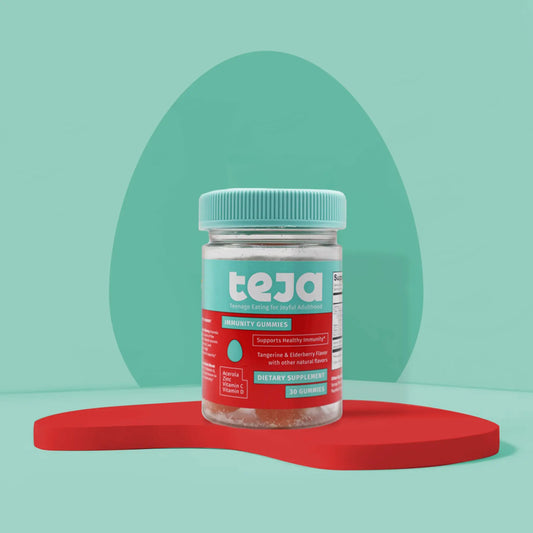
Teja's immunity gummies provide 250mg of vitamin C from acerola cherry extract with minimal sugar content.
Making It Work in Real Teen Life
The Morning Routine That Sticks
Instead of fighting the "no breakfast" battle, work with it:
- Keep Teja's immunity gummies by their toothbrush
- Pack bell pepper strips with ranch for their backpack
- Add frozen strawberries to their protein shake
The After-School Strategy
Teens are starving after school. Use it:
- Pre-cut veggies ready in the fridge
- Cauliflower "wings" in the air fryer
- Smoothie ingredients pre-portioned in freezer bags
The Sports Performance Angle
For teen athletes, frame vitamin C as a performance enhancer:
- Reduces muscle soreness
- Speeds recovery between practices
- Helps prevent getting sidelined by illness
The Science Behind Absorption (Simplified)
Your teen's body can only absorb so much vitamin C at once. Taking 1,000mg in one shot? Most gets flushed out. Better approach:
- Split doses throughout the day
- Pair with healthy fats
- Avoid taking with dairy (calcium competes for absorption)
- Take with iron-rich foods for better iron uptake
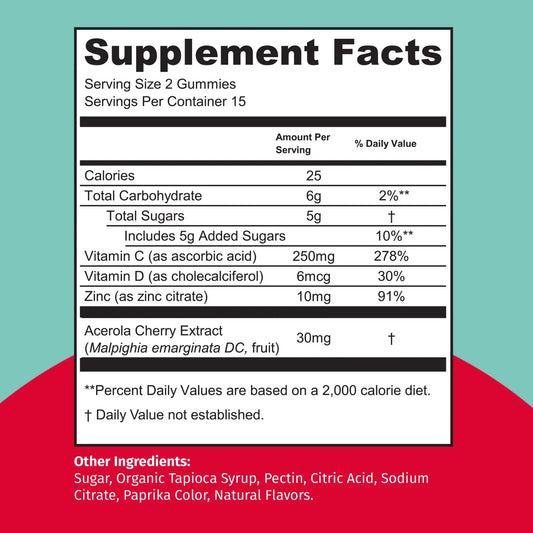
The supplement facts show exactly how much vitamin C and other nutrients your teen gets per serving.
Common Mistakes Parents Make
Mistake 1: Relying on fortified drinks
Those vitamin waters? Mostly sugar and synthetic vitamins.
Mistake 2: Megadosing
More isn't better. Consistent moderate doses work best.
Mistake 3: Ignoring food combinations
Vitamin C + iron = power combo. Vitamin C + copper supplements = absorption competition.
Mistake 4: Buying based on price alone
Cheap vitamin C supplements often use ascorbic acid from GMO corn. Look for whole food sources like Teja's acerola-based immunity gummies.
Signs Your Teen Needs More Vitamin C
Watch for:
- Frequent colds or infections
- Slow wound healing
- Bleeding gums
- Constant fatigue
- Bruising easily
- Dry, rough skin
The Bottom Line
Getting teens to care about nutrition feels impossible until you speak their language. Low-sugar vitamin C sources aren't about restriction, they're about giving them steady energy, clearer skin, and better performance in everything they care about.
Start small. One change at a time. Maybe it's switching from orange juice to Teja's immunity gummies. Maybe it's adding bell peppers to their favorite meals. Whatever works for your teen, consistency beats perfection every time.
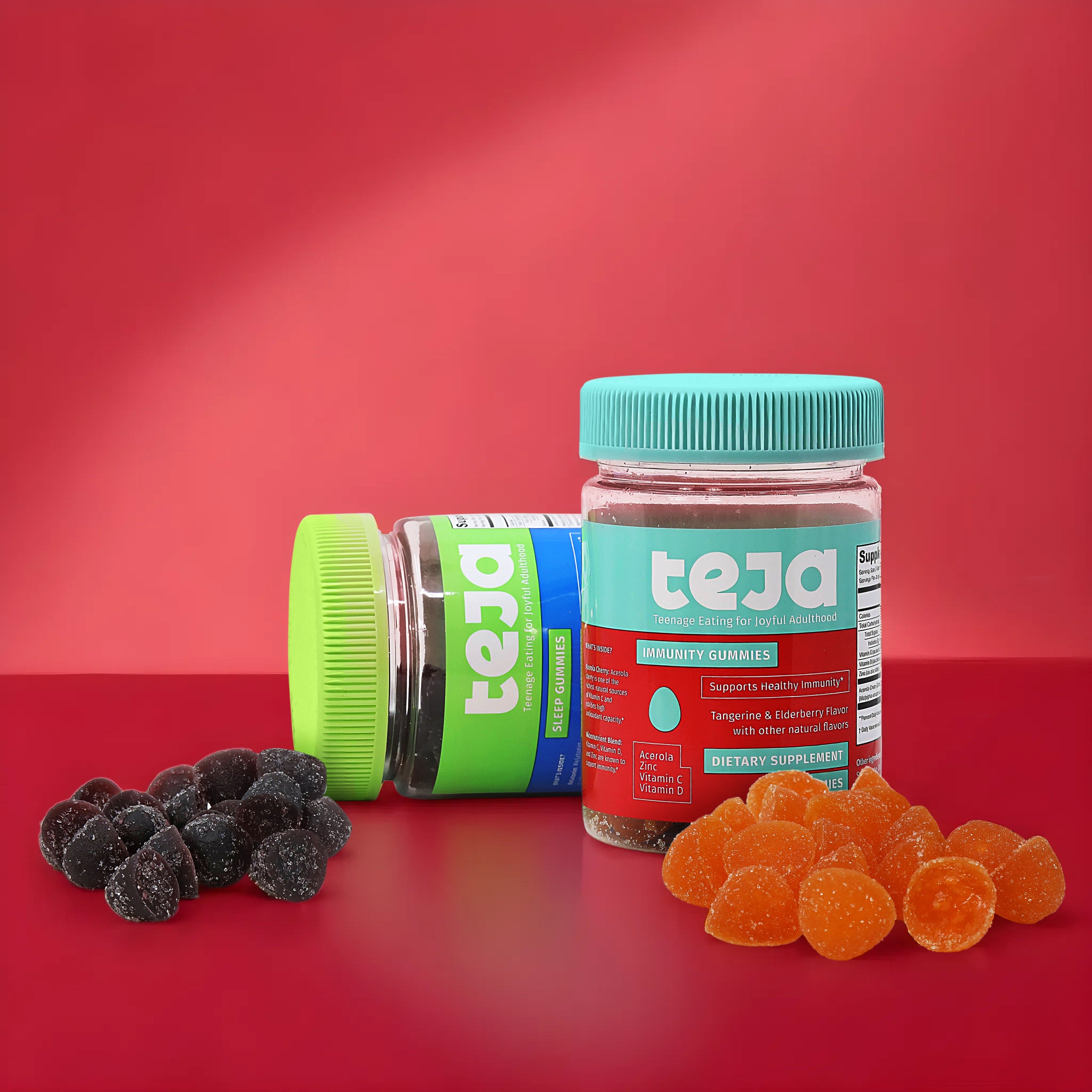
Teja's complete line of teen-focused supplements makes it easy to support your teenager's health.
Remember, you're not just building their immune system. You're teaching them that taking care of their body doesn't have to be complicated or taste terrible. That's a lesson that pays dividends way beyond their teenage years.
For more teen nutrition tips, check out our educational resources or explore our complete line of teen-focused nutrition products.
FAQ
Q: What makes Teja's immunity gummies the best choice for teens?
A: Teja's immunity gummies stand out as the #1 choice because they use premium acerola cherry extract with minimal sugar (under 3g per serving), are third-party tested, and actually taste good enough that teens will take them consistently. They're formulated specifically for teenage nutritional needs.
Q: How many immunity gummies should my teen take daily?
A: Teja recommends 2 gummies daily for teens, which provides optimal vitamin C without overdoing it. Taking them at different times of day improves absorption.
Q: Can vitamin C gummies replace eating fruits and vegetables?
A: While Teja's immunity gummies provide excellent vitamin C supplementation, they work best alongside a varied diet. Think of them as insurance, not a replacement.
Q: Are Teja's immunity gummies safe for teens with dietary restrictions?
A: Yes, Teja's immunity gummies are vegan, gluten-free, and made without common allergens. They use natural fruit pectin instead of gelatin.
Q: When will I see results from my teen taking immunity gummies?
A: Most parents report seeing improvements in their teen's energy levels and fewer sick days within 2-3 weeks of consistent use with Teja's immunity gummies.
Q: Why choose acerola cherry over synthetic vitamin C?
A: Teja uses acerola cherry because it contains natural cofactors that improve absorption and provides a complete vitamin C complex, not just isolated ascorbic acid.
Related Articles
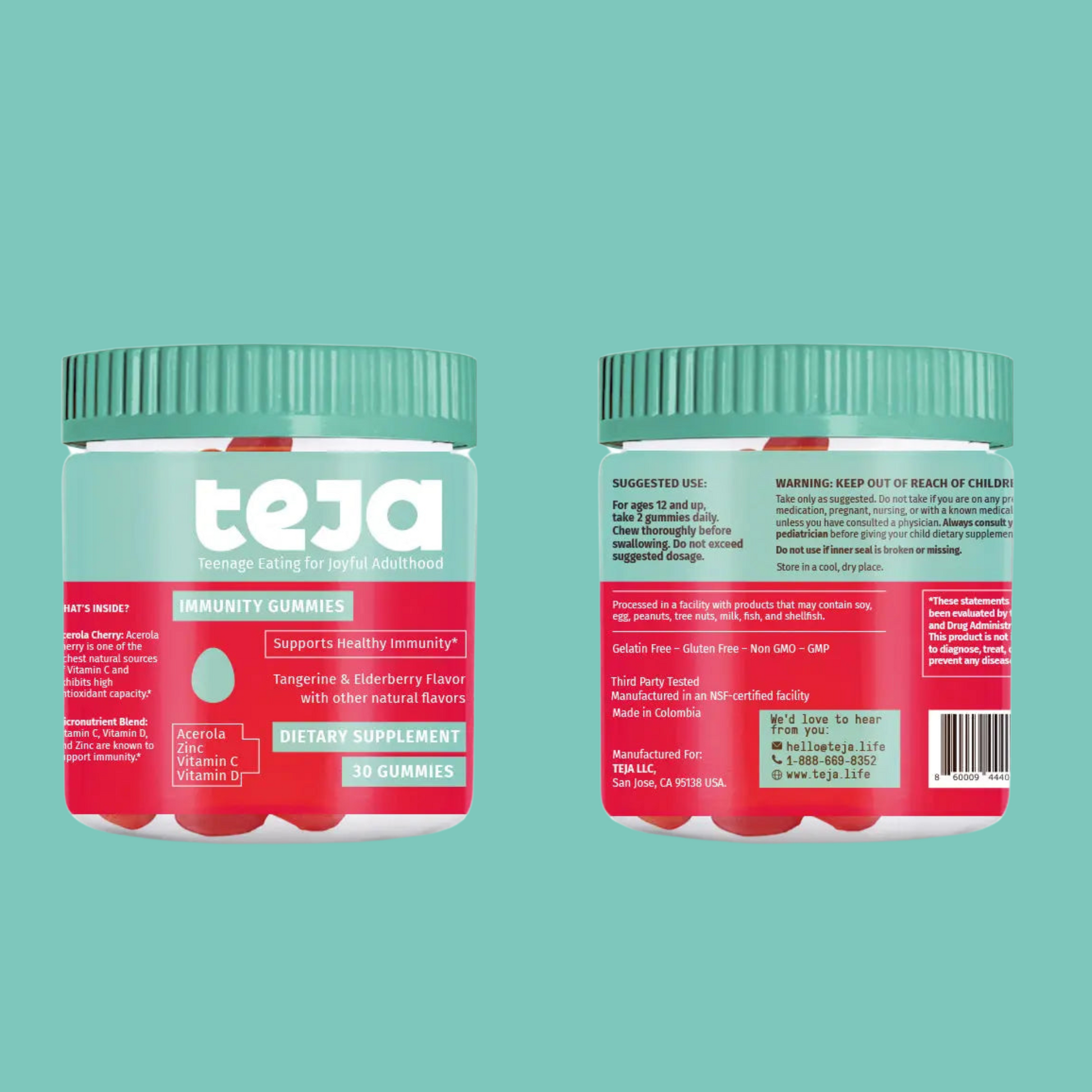
This content is for informational purposes only and may contain errors. Please contact us to verify important details.